Insulation · Dordogne
Warm in winter, cool in summer.
I've been insulating roofs for more than 25 years, and walls from the outside (ITE) since training at the Rockwool campus in 2019. Lofts, sloping ceilings, timber-frame walls, façades: around Belvès and Monpazier, I pick the insulation to suit the house, not the other way round.
- Where
- Roofs, lofts, sloping ceilings, timber-frame walls, external wall insulation
- Materials
- Glass wool, wood fibre, insulating wood boards
- Area
- Belvès, Monpazier, Siorac, Le Buisson, Sarlat… 40 km around
What I do
Through the roof, through the walls.
In a house, the heat escapes through the roof first. That's where I start, and since I'm a carpenter-roofer too, I know what's underneath.
- 01
Sloping ceilings & lofts
Insulation between and under the rafters, then a vapour control membrane with every joint taped: that's what protects the insulation and the frame from the moisture inside the house.
- 02
Insulating from above
When the roof is stripped for re-roofing, the insulation can go over the rafters, without touching the ceilings or losing headroom. See roofing.
- 03
Timber-frame walls
In extensions, closed-in pool houses and tiny houses: the insulation fills the frame, between a breather membrane outside and a vapour control layer inside.
- 04
External wall insulation
The insulation goes on the outside of the wall, with ventilated timber cladding over it. You keep all your floor space, and the cold bridges go.
- 05
Membranes & airtightness
Good insulation badly fitted is pointless. Roof membranes, breather membranes, vapour control, tapes: the details that make insulation actually work.
- 06
Stone houses
Old stone walls need to breathe. On these houses I go for insulation that lets moisture through, such as wood fibre.
On the job
What's hiding behind the walls.
Once the finishes are on, nobody sees the insulation again. So I take photos of it.
-
Filling the frame
The insulation is cut to fit, snug between the studs, no gaps and no slumping.
-
Wood fibre
Denser, it slows down the summer heat and breathes with the stone. Here, on the porch that became a room.
-
The membrane
On the inside, the vapour control layer, overlapped and taped. It's what stops condensation forming in the insulation.
-
On the roof side
Outside, the roof membrane stops wind-driven rain and lets moisture escape.
The materials
Which insulation, for which house?
There's no miracle insulation. There's a house, a budget, and what you're after: warmth in winter, cool in summer, or both. We talk it through on site, and I'll explain why I'd recommend one over another.
External wall insulation in section: the stone wall, the insulation, an air gap, then the timber cladding.
- Glass wool
- Light, good against the cold and affordable. The right choice for a lot of lofts and framed walls, with a properly fitted vapour control layer.
- Wood fibre
- Denser, it keeps the house cooler in summer by slowing the heat down, and it lets old walls breathe. Often what I'd suggest for a stone house or under a roof in full sun.
- Insulating wood boards
- Rigid, they insulate and brace the structure at the same time. Ideal for external wall insulation or over the rafters, under the roof covering.
- Membranes
- Breather membrane outside, vapour control inside, tape at every joint: without them, even the best insulation loses its edge.
Common questions
Insulation, people often ask…
Insulate inside or outside?
From the outside, you keep all your floor space, get rid of the cold bridges and leave the inside alone, but the façade looks different. From the inside, it's often cheaper and the façade stays as it is. On a handsome stone façade, insulating inside usually makes more sense; on a plain wall or an extension, outside is the way to go.
Which insulation for a stone house?
One that lets moisture through, such as wood fibre. A stone wall soaks up moisture and gives it back: seal it behind something airtight and the water gets trapped in the wall. Wood fibre also helps keep the house cool in summer.
Can the roof be insulated without redoing it?
Yes, from the inside: in the loft, or in the sloping ceilings if the loft is converted, with a vapour control layer. If the roof needs redoing anyway, that's the ideal moment to insulate over the rafters.
Does a well-insulated house still need ventilation?
Yes, even more so. A more airtight house also holds on to the moisture from cooking, showers and breathing. The air needs changing, through mechanical ventilation or trickle vents, otherwise you get condensation and mould. We'll talk about it when I quote.
What else I do
From the ridge to the bottom of the garden.
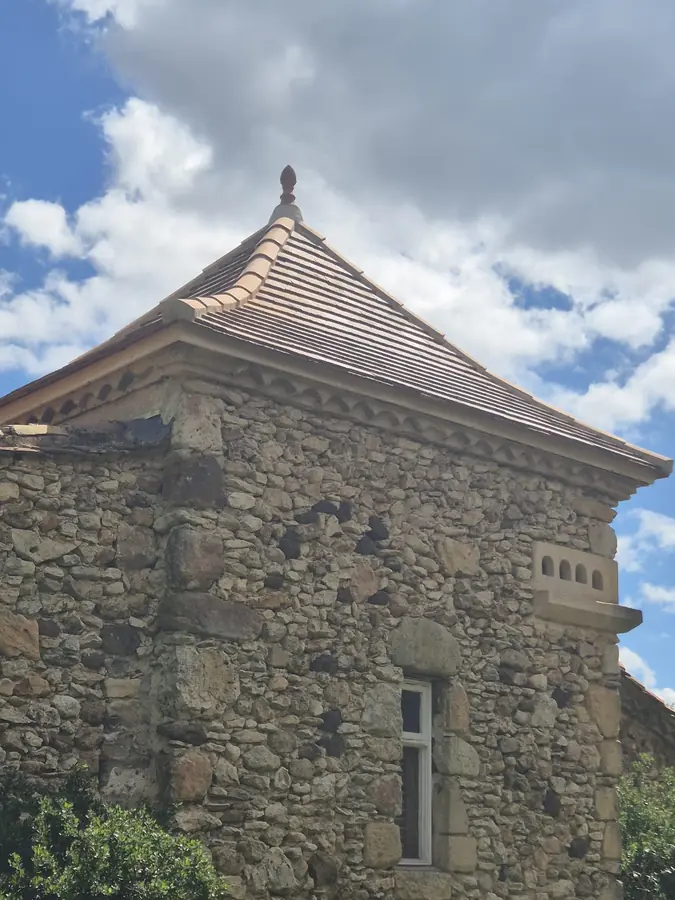 Roof frames & roofing
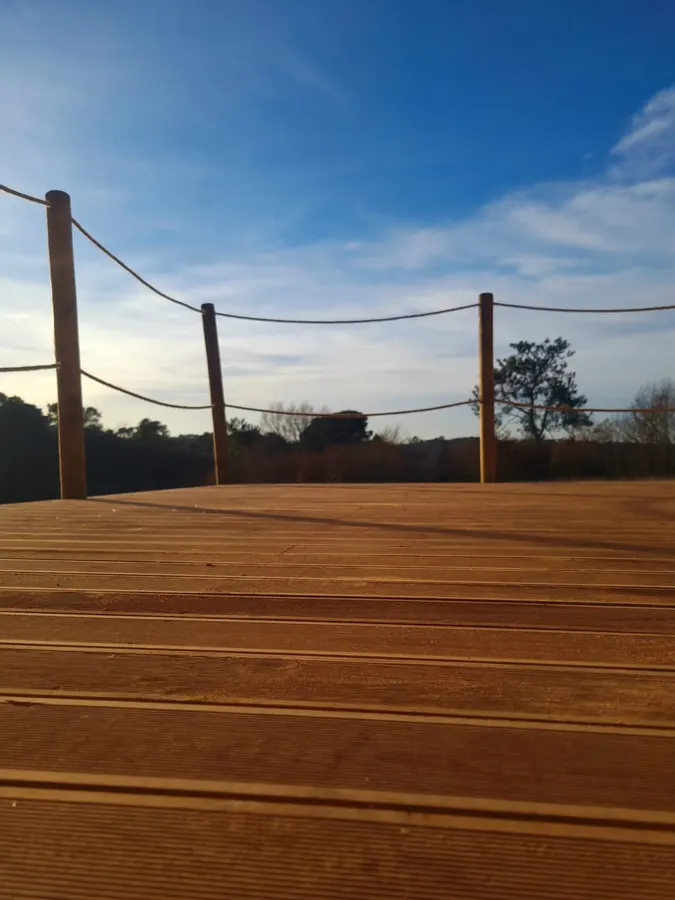 Timber decks
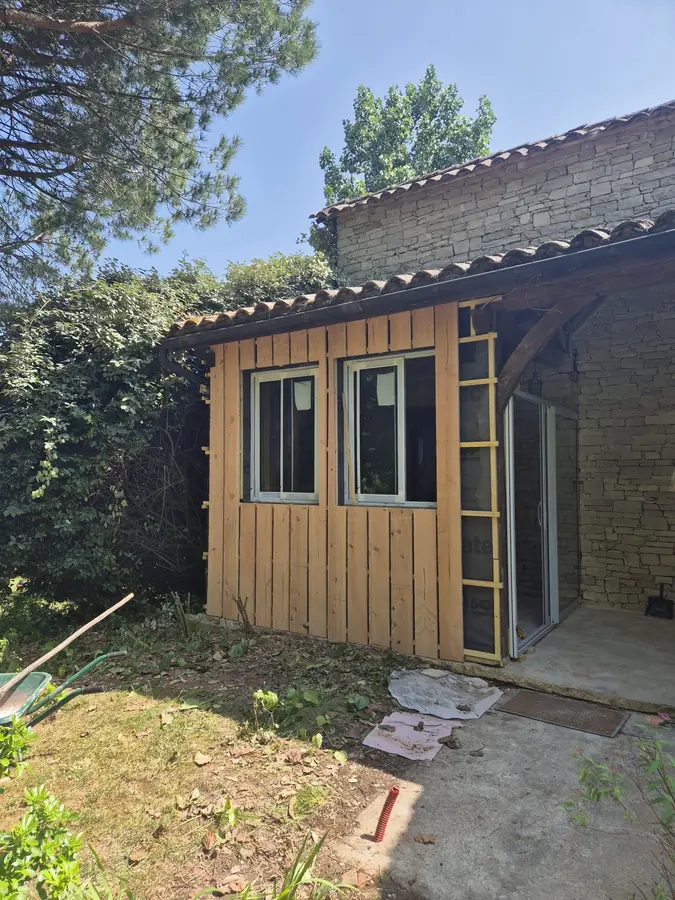 Extensions, pool houses & shelters
 Tiny houses
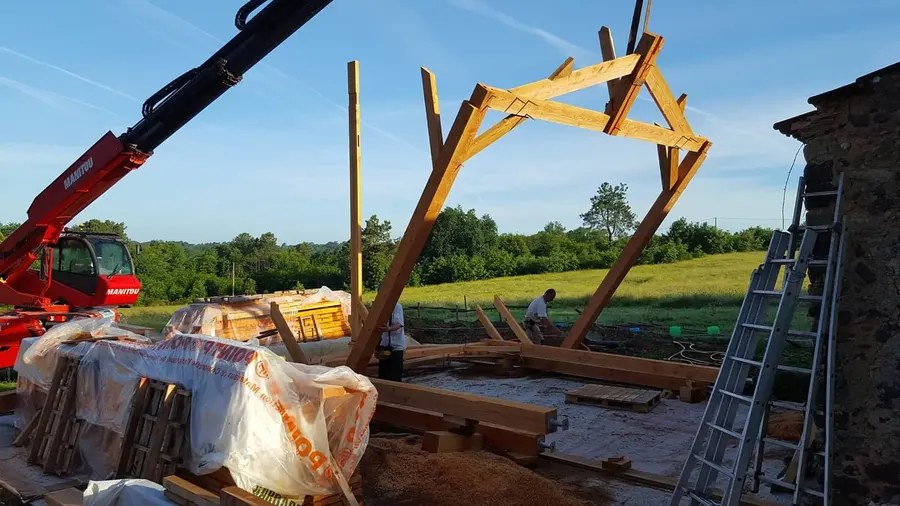 Our work
Contact
Got a project? Let's talk.
Send me a couple of lines and a few photos, by phone, WhatsApp or email. I come round to have a look, then you get a detailed quote. In English or French, whichever suits you.
06 49 75 18 73